Why were Soviet nuclear cities left off every public map?
After 1946 the Soviet state removed whole nuclear cities from public maps and gave them numbers such as Arzamas-16 and Chelyabinsk-40. One of them was so secret that its 1957 accident was named after a different town.
By the Hidden World research team · Last updated November 18, 2026
TL;DR
After World War II the Soviet Union built closed nuclear cities, removed them from public maps and gave them code names such as Arzamas-16 and Chelyabinsk-40. Russia still runs more than 40 closed territories. The 1957 Mayak explosion is named after Kyshtym because the plant's own city could not be named.
This article contains affiliate links. If you buy or book through them, Hidden World may earn a small commission at no extra cost to you. As an Amazon Associate I earn from qualifying purchases.
The Soviet state hid its nuclear cities because they built and supplied the atomic bomb. From the late 1940s, authorities removed every mention of these towns from documents and maps, replaced their names with code numbers such as Arzamas-16 and Chelyabinsk-40, and addressed mail through other cities. Secrecy was the point of the whole design.
Why did the Soviet state erase whole cities from the map?
The Soviet bomb programme needed scientists, engineers, reactors, chemical plants and weapons workshops, and it needed them out of sight. The Atomic Heritage Foundation, which documents the history of the nuclear age, records that dozens of such cities were built after World War II and that entire communities were kept closely guarded secrets, with all mentions removed from documents and maps. The result was a set of towns that existed for the people inside them and for the state that ran them, but not for the public.
Closed cities were often called post boxes. Mail was addressed to a number at a post office in another place, so that an envelope never carried the real name of the town it was meant for. A letter to a physicist in a weapons laboratory might be addressed only to a box number in a regional centre. The town had a fence, a checkpoint and a security service, but no name that an outsider could look up.
The scale of the system is hard to pin down. The historian Kate Brown, in her essay on the Kyshtym explosion for the Soviet History archive at Michigan State University, states that the Soviet Union had ten closed nuclear cities, known by the acronym ZATO, a Russian abbreviation for closed administrative-territorial entity. The Atomic Heritage Foundation, counting all closed cities rather than only the nuclear ones, notes that the Russian government acknowledged 42 closed cities in 2001. The two figures do not conflict. They measure different things.
What happened to Arzamas-60 and why did it become Arzamas-16?
The weapons design centre now known as Sarov began as a secret laboratory in 1946. The Atomic Heritage Foundation records that the city was first called Arzamas-60, but that authorities changed the name because the number 60 could give away its location. It became Arzamas-16. The name borrowed from the real town of Arzamas, in Nizhny Novgorod Oblast, while the number carried no meaning an outsider could use.
The detail shows how the system thought. A name was a piece of information, and so was a number. Authorities treated even a digit in a code name as something an enemy analyst might use to locate the site. Sources differ by a year on exactly when the city vanished from unclassified maps, with 1946 and 1947 both appearing in the literature, so it is safest to say it disappeared in the first years after the war.
Sarov remains a closed city today, under the control of the state nuclear corporation Rosatom, and it keeps a museum of nuclear weapons. Arzamas-16 was the place where Soviet scientists designed warheads, and the broader story of how the Soviet bomb came together is told in David Holloway's Stalin and the Bomb, a Yale University Press study of Soviet atomic policy from the physics of the 1920s through the hydrogen bomb of the 1950s.
What did Chelyabinsk-40 produce?
Chelyabinsk-40 was the closed city built around the Mayak plutonium plant in the southern Urals. Plutonium is the core material of many atomic bombs, and Mayak was where the Soviet Union made it. The city that housed the plant is now called Ozyorsk. Over the years its code name changed from Chelyabinsk-40 to Chelyabinsk-65, and Brown writes that it first appeared on published maps only in 1989.
The plant dealt with waste in ways that harmed the people outside its fence. From 1949 to 1951 it released most of its liquid waste into the Techa River, and discharges continued afterward. The river flows into the Ob. Villages lay along the river, and their residents drank from it and used its banks. Resettlement of one village, Muslyumovo, began only in 2006, and only about half of its villagers were moved. The people downstream had no say in the matter and, for decades, no public explanation of what they had been exposed to.
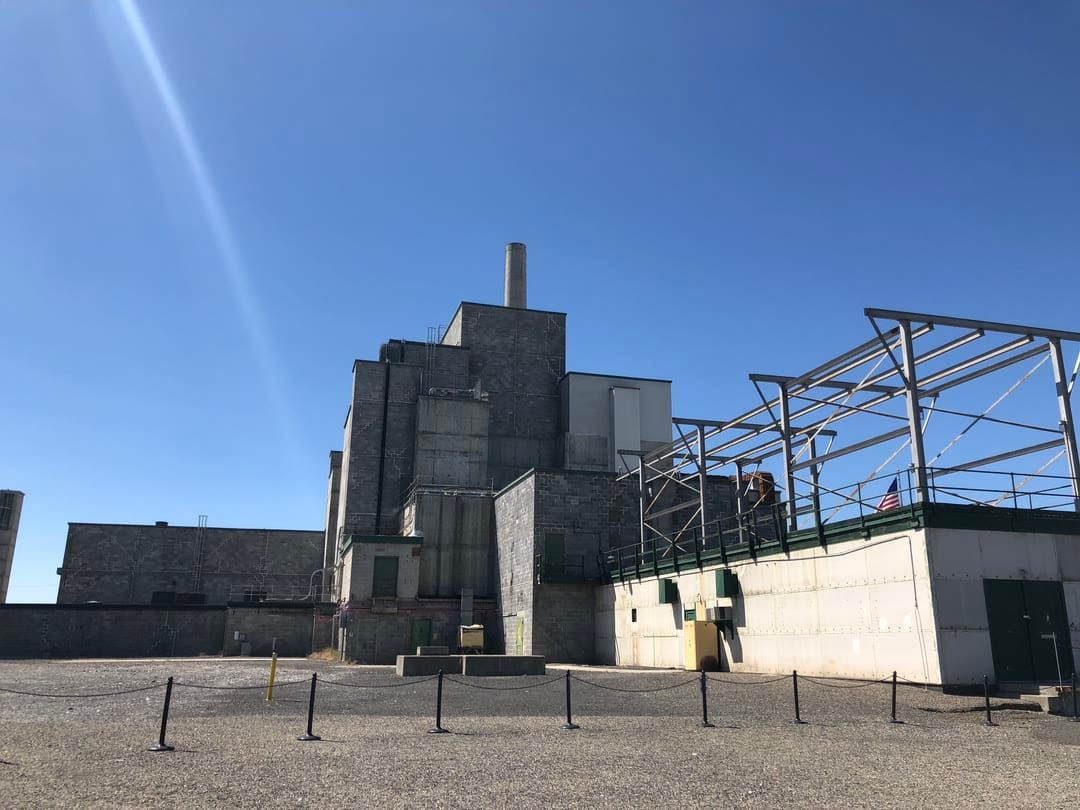
The same secrecy that protected the city from foreign eyes also protected the plant from questions at home. Brown's book Plutopia, published by Oxford University Press, draws on archives and interviews to follow Ozersk and compares it with Richland, Washington, the American town beside the Hanford plutonium site. Both towns made plutonium, and both slowly released radiation into the surrounding land and water. Brown calls these long, quiet releases slow-motion disasters.
Why is the 1957 explosion named after Kyshtym?
On 29 September 1957 an underground waste storage tank at the Mayak plant overheated and exploded. Brown's essay states that the blast released about 20 million curies into the atmosphere and contaminated a strip of farmland about four miles wide and thirty miles long, affecting 87 villages. Villagers, including children, buried crops by hand, and several villages were evacuated or resettled. The accident is rated Level 6 on the International Nuclear Event Scale, the second highest rating, below only Chernobyl and Fukushima.
The accident is known as the Kyshtym disaster, yet it did not happen in Kyshtym. Chelyabinsk-40 did not exist on any published map, so it could not be named. Brown explains that Zhores Medvedev, a Russian dissident and biologist, published a book in the United States in 1979 that described the accident, and that it became known as the Kyshtym accident, named after Kyshtym, a nearby town that was the only populated place on published maps. Medvedev's 1979 US book was, Brown writes, the first public mention of the city. The name stuck because the real one was a state secret.
Inside the gates, the managers worked to keep the city running. Brown reports that plant managers used the city's gates and security to keep contaminated vehicles out and banned soldiers and temporary cleanup workers from entering, and that they spent 11 million rubles on public relations. About 3,000 employees quit, she writes, although many later asked to return. Soviet authorities kept the accident secret until they began declassifying it in 1989, and Russia officially acknowledged it in 1992.
What was daily life like inside a closed city?
Residents of closed cities were treated as a privileged and watched class. Brown writes that they received higher wages, better health care, housing and schooling than most Soviet citizens, that workers were vetted for political reliability and medical health, and that they signed oaths of secrecy. The bargain was simple: comfort in exchange for silence and compliance.
Plutopia treats this bargain as the central feature of both Ozersk and Richland. The book argues that the dangers of plutonium production and Cold War secrecy pushed officials in both countries to build communities that offered extensive welfare and consumer goods in return for residents' cooperation. In Ozersk, the offer came with the fence. The same state that supplied the shops controlled who entered and who left, and what could be said about the place outside it.
For readers who want the wider context of how Soviet officials handled nuclear accidents and the people exposed to them, Brown's later book Manual for Survival applies the same archival method to the Chernobyl disaster and its aftermath in Ukraine and Belarus. The secrecy that hid Chelyabinsk-40 was part of a longer habit of classifying the consequences of nuclear work.
Do closed cities still exist in Russia?
They do. Russia still keeps closed administrative-territorial entities under a federal law on ZATO, and the Atomic Heritage Foundation notes that many remain closed today. Counts vary by source. Reference works put the number of publicly acknowledged closed cities at 44, with about 1.5 million residents, and say that roughly 15 more may exist that the government has not named. Sarov and Ozyorsk are both on the list, but both now appear on maps, with their real names, and the code numbers are history.
How many closed nuclear cities did the Soviet Union have?
Brown's essay states that the Soviet Union had ten closed nuclear cities. These were the cities that made weapons-grade uranium and plutonium or built nuclear weapons. They were part of a larger set of closed towns that included other military, industrial and scientific sites and border areas.
What does ZATO stand for?
ZATO is the Russian acronym for closed administrative-territorial entity. It is the legal category under which Russia still administers its closed cities. Entry is restricted, and access requires permission, which is why visits to places such as Sarov are not part of ordinary travel.
When did Chelyabinsk-40 first appear on a map?
Brown writes that the city, now called Ozersk, first appeared on maps in 1989. Before that, the plant and its town existed in public only under the name of other places. Medvedev's 1979 US book was, Brown writes, the first public mention of the city, a full decade earlier, and it was published abroad rather than in the Soviet Union.
Why did the Soviet state use post-box addresses?
Using a number at another city's post office let the state hide where a closed town was and what it did. Residents could send and receive mail, while outsiders learned nothing from an address. The practice is the reason closed cities were nicknamed post boxes, and it fits the wider rule of removing real names from documents and maps.
Was the Kyshtym explosion a plutonium bomb blast?
No. It was a chemical explosion in a waste storage tank, caused by a cooling failure that let the contents overheat. It spread radioactive material over a long strip of farmland, but it was not a weapon detonation. Brown describes the tank as an underground waste storage tank at the Mayak plutonium production plant.
The cities of Arzamas-16 and Chelyabinsk-40 were removed from maps because of what they made, and their code names show how far the secrecy went. The Kyshtym name is the clearest trace of that system, since an accident at one city was recorded under another town's name. Both cities now appear on maps as Sarov and Ozyorsk, and both remain closed.
Key Facts
Sources
- Atomic Heritage Foundation, Soviet Closed Cities
- Kate Brown, The Kyshtym Explosion, Soviet History archive, Michigan State University
- Kate Brown, Plutopia (Oxford University Press)
- Kate Brown, Manual for Survival (W. W. Norton)
- David Holloway, Stalin and the Bomb (Yale University Press)
- Plutopia, Wikipedia
- Mayak, Wikipedia
- Closed city, Wikipedia
Related stories
- What Was the Soviet Dog Head Experiment of 1925?
- Why are there 280 kilometres of tunnels under Paris?
More hidden stories at hiddenworld.io
Published: November 2026 · Written by the Hidden World research team · hiddenworld.io