Why are there 280 kilometres of tunnels under Paris?
The Paris Catacombs are two kilometres of a 280-kilometre quarry network. In 2004 police found a cinema in the tunnels. No one has ever identified who built it.

This article contains affiliate links. If you book through them, Hidden World earns a small commission at no extra cost to you.
Paris sits on top of approximately 280 kilometres of medieval limestone quarries known as les carrières. They were carved over six centuries to extract the stone that built Notre-Dame, the Louvre, and most major Paris monuments. The Catacombs that tourists visit occupy roughly two kilometres of this network. In 2004 police discovered a fully equipped cinema in one of the chambers. No one has ever identified who built it.
What is the difference between the Paris Catacombs and the carrières?
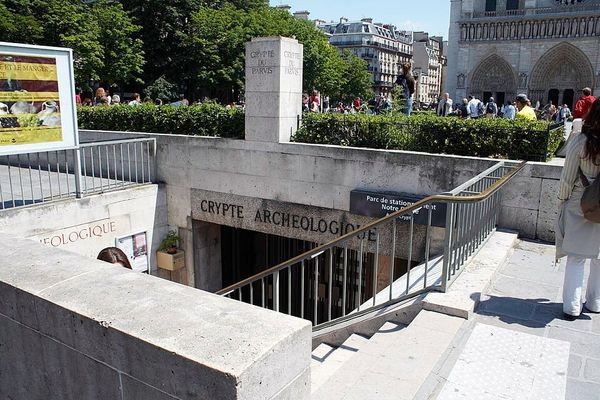
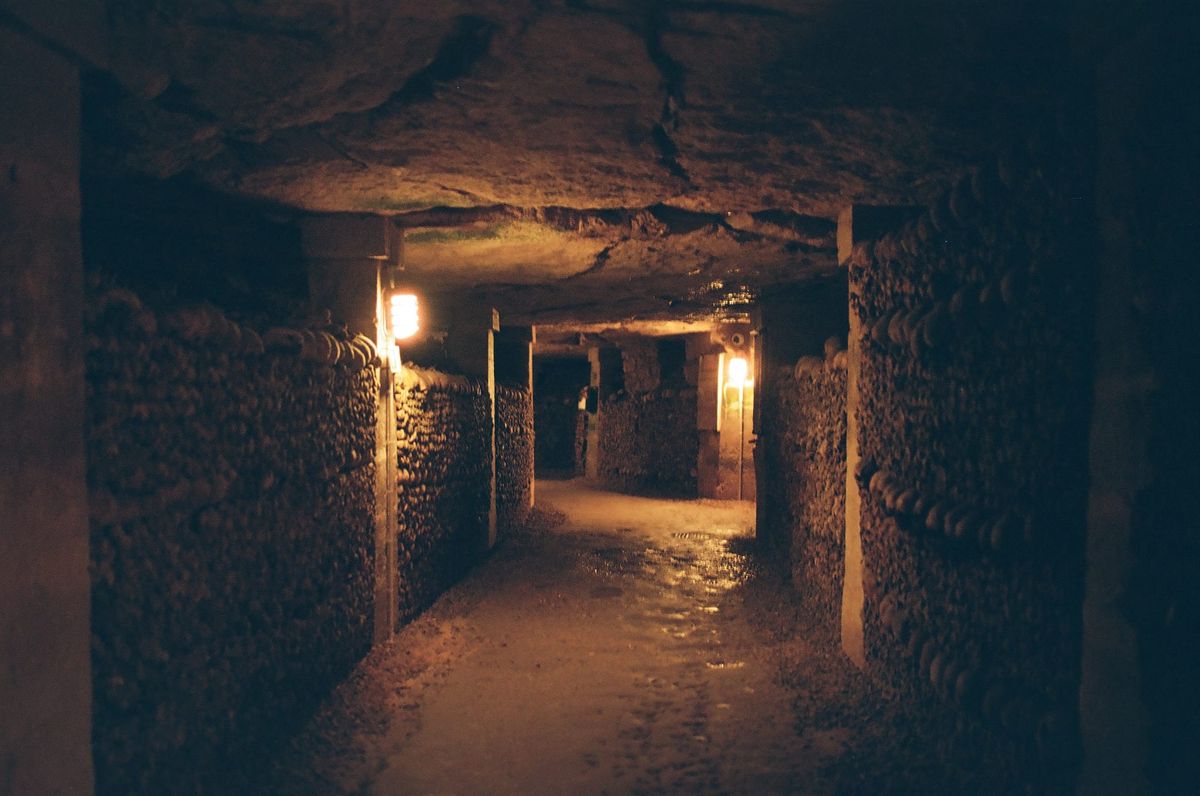
The word "catacombs" is misleading. What tourists visit at 1 Avenue du Colonel Henri Rol-Tanguy in the 14th arrondissement is a small section of a much larger underground system. Six million people queue for it every year. They descend fourteen metres, walk through two kilometres of tunnel lined with the bones of six million dead, and return to the surface believing they have seen the Paris underground.
They have seen a fraction of it.
The carrières — the quarries — are the original tunnels. They were cut into the limestone bedrock beneath most of the city over roughly six centuries to extract the pale stone that gives Paris its colour. Notre-Dame was built from this stone. So was the Louvre and virtually every major monument in the city. Paris consumed its own foundations to build itself.
The Catacombs were created later, beginning in 1786, when the city transferred bones from overflowing cemeteries into a small portion of the quarry network. The ossuary is a repurposing of tunnels that already existed. The quarries themselves extend far beyond the bone-lined corridors and beneath arrondissements the Catacombs tour never reaches.
How were the limestone quarries built?
The quarrying began as open-pit extraction on what was then the outskirts of the Roman city of Lutetia. As the city expanded over centuries, the quarries moved underground. Workers cut the stone by hand, chiselling blocks from the bedrock, hauling them to the surface through vertical shafts, and loading them onto carts bound for building sites across Paris.
The quarries followed the geology. The Lutetian limestone sits in a band roughly twenty metres below the surface on the Left Bank. The quarries traced it south and west beneath what is now the 5th, 6th, 13th, 14th, and 15th arrondissements. The Right Bank had its own quarries, cut from gypsum — the mineral used to make plaster of Paris — but most of those were filled in during the 19th century.
The scale accumulated over centuries. No single generation planned a 280-kilometre network. Each generation cut what it needed, left the voids behind, and built the city on top.
Why did Paris collapse into its own foundations in the 18th century?
By the 18th century, six hundred years of quarrying had left the ground beneath Paris dangerously hollow. The voids were vast, the pillars left to support the ceiling were sometimes inadequate, and nobody had a complete map of what was down there.
In 1774, a section of road near what is now the 14th arrondissement dropped into a quarry void, taking houses and residents with it. Other collapses followed. The ground beneath entire neighbourhoods was unstable, and the city did not know the full extent of the problem.
In 1777, Louis XVI appointed Charles-Axel Guillaumot as the first Inspecteur Général des Carrières — Inspector General of Quarries. Guillaumot's task was to map the tunnels, reinforce the weakest sections, and prevent Paris from swallowing itself. The Inspection Générale des Carrières still exists today. Its surveyors descend into the tunnels regularly, maintaining reinforcements that have kept the city standing for nearly 250 years.
What did French police find under the Palais de Chaillot in 2004?
In September 2004, police conducting a training exercise beneath the Palais de Chaillot — the grand building across the Seine from the Eiffel Tower — entered an area of the quarries they had not previously mapped. They found a fully equipped cinema.
The chamber contained stone-carved seating, a full-size projection screen, a bar, a collection of film noir and thriller DVDs, and a restaurant-grade kitchen with running water and electricity tapped illegally from the municipal supply above. A surveillance camera had been installed at the entrance. When police returned three days later to investigate the electrical connections, the equipment had been removed.
No one has ever been identified or charged. The cinema was attributed in press coverage to the cataphiles — the loose, informal community of people who enter the quarries through unsecured manholes, drainage tunnels, and building basements. The cataphile community has existed for decades. They hold gatherings, concerts, and film screenings in the quarry chambers. They maintain their own maps. The cinema beneath the Palais de Chaillot was the most elaborate installation ever discovered, but it was not the only one. The quarries contain painted murals, carved sculptures, and furnished rooms maintained for years by people the city has never identified.
Can you visit Les Carrières des Capucins?
The quarry tunnels themselves are not publicly accessible. Entering them is illegal under a 1955 prefectural decree, punishable by a fine. The police maintain a dedicated unit that patrols the tunnels and issues fines to anyone found inside.
The nearest the public can get to the quarry network is the official Catacombs — the ossuary at 1 Avenue du Colonel Henri Rol-Tanguy in the 14th arrondissement. It is open Tuesday through Sunday. Tickets should be booked in advance; the queue without a pre-booked slot can exceed two hours.
Guided tours offer context that a solo visit does not. A standard guided tour covers the ossuary, the history of the quarries, and the bone arrangements in roughly ninety minutes. A VIP tour with restricted-area access goes further, into chambers the general-admission route does not reach. Both can be booked through Viator.
The Capuchin quarries sit beneath the 14th arrondissement within the broader network. The name refers to the former Capuchin monastery that once stood above. These tunnels include some of the largest chambers in the system, large enough to hold the concerts and film screenings that cataphiles have been organising for decades.
For those who want to understand the full scale of what lies beneath Paris — beyond the two-kilometre ossuary tour — the free Hidden Paris guide at hiddenworld.io covers the carrières in detail, including the 2004 cinema discovery and the history of the cataphile community.
Frequently asked questions
How long are the tunnels under Paris?
The quarry tunnel network beneath Paris extends approximately 280 kilometres. The Catacombs tour that tourists visit covers roughly two kilometres of this network.
What is the difference between the Paris Catacombs and the quarries?
The Catacombs are a small section of quarry tunnels repurposed in 1786 to hold bones transferred from overflowing Parisian cemeteries. The quarries — les carrières — are the original medieval limestone tunnels, carved over six centuries to extract building stone. The Catacombs are contained within the quarry system, not the other way around.
Who built the cinema under Paris in 2004?
No one has ever been publicly identified. The cinema was discovered beneath the Palais de Chaillot during a police training exercise. It contained stone seating, a screen, a bar, and a restaurant-grade kitchen. When police returned to investigate, the equipment had been removed. The installation was attributed to the cataphile community.
Is it legal to enter the Paris quarry tunnels?
No. Entry into the quarry tunnels is prohibited under a 1955 prefectural decree. The police maintain a patrol unit that issues fines to anyone found inside. The official Catacombs at 1 Avenue du Colonel Henri Rol-Tanguy are the only publicly accessible section.
What were the quarries used for?
The quarries were mined for Lutetian limestone — the pale building stone that gives Paris its distinctive colour. Notre-Dame, the Louvre, and most major Parisian buildings were constructed from stone extracted from these quarries.