Who Is Mary Bell, and What Happened in Scotswood in 1968?
Two boys, aged four and three, died in Scotswood in the summer of 1968. The girl convicted of killing them was 11. Her identity today is protected for life by court order.

Hidden World earns a small commission on books bought through the link in this article, at no extra cost to readers.
In 1968, Mary Bell killed two boys in Scotswood, Newcastle: Martin Brown, aged four, and Brian Howe, aged three. She was 10 when Martin died and 11 when Brian died. A jury at Newcastle Assizes convicted her of manslaughter on grounds of diminished responsibility. Released in 1980 under a new identity, she is protected for life by court order.
What was Scotswood like in 1968?
Scotswood lies in the west end of Newcastle upon Tyne, on the north bank of the river. In the 1960s the city was clearing its Victorian terraced slums to make way for new housing. Some families stayed on in condemned streets while they waited to be rehoused. The cleared plots filled with rubble, and children played on them.
One of those plots ran alongside St Margaret's Road. Local children called it the Tin Lizzie. Derelict houses stood along the same road.
Mary Flora Bell was born on 26 May 1957. Her mother, Betty, was 17 at the time and was often away from home. Billy Bell married Betty when Mary was a baby; whether he was her biological father is unknown. Her closest friend that summer was Norma Bell, a 13-year-old neighbour and no relation.
What happened to Martin Brown?
On the afternoon of 25 May 1968, three children found four-year-old Martin Brown in an upstairs bedroom of a derelict house at 85 St Margaret's Road. A workman, John Hall, tried to revive him and could not. The pathologist, Bernard Knight, found no sign of violence and could not establish a cause of death. The inquest on 7 June returned an open verdict.
The next day was Mary's 11th birthday. On 26 May she and Norma broke into a nursery on Woodland Crescent through the roof and wrecked it. Staff found four notes claiming Martin's murder.
One read: "I murder SO That I may come back." Police dismissed the notes as a childish prank.
On 29 May, shortly before the funeral, both girls knocked at the door of Martin's mother, June Brown, and asked to see him. Mary told her: "Oh, I know he's dead; I want to see him in his coffin." His death stayed unexplained for two more months.
How was Mary Bell caught?
On 31 July 1968, three-year-old Brian Howe was last seen playing with his dog and the two girls. A search party found him at 11:10 that night, between two concrete blocks on the Tin Lizzie. Broken scissors lay by his feet.
The coroner found he had been strangled, probably by a child. His body had been cut, and someone had tried to carve the letter M into his stomach.
Forensic work tied both girls to the scene. Fibres from Mary's and Norma's clothing matched fibres on Brian's body. Grey fibres from Mary's dress were also found on Martin Brown.
Mary was questioned on 1 and 2 August. On 5 August Norma made a full statement naming Mary as the one who strangled Brian. Detective Chief Inspector James Dobson later said that on the day of Brian's funeral, 7 August, Mary stood outside the house "laughing and rubbing her hands."
Both girls were charged with Brian's murder at 8 that evening. Mary's reply was recorded: "That's all right by me."
Why was she convicted of manslaughter, not murder?
The trial opened at Newcastle Assizes on 5 December 1968, before Mr Justice Cusack and a jury. Rudolph Lyons QC prosecuted. Harvey Robson QC defended Mary, and R. P. Smith QC defended Norma.
Four psychiatrists examined Mary. They found no mental illness but diagnosed a psychopathic personality disorder. A defence witness, David Westbury, listed her methods as "automatic denial, ingratiation, manipulation."
Under the Homicide Act 1957, a finding of diminished responsibility reduces murder to manslaughter. The psychiatric evidence supported that finding. On 17 December the jury cleared Mary of murder and convicted her of the manslaughter of both boys. Norma was acquitted of all charges.
Cusack called Mary "dangerous" and said she posed a "very grave risk to other children." He ordered her detained at Her Majesty's pleasure, a sentence with no fixed end. She was 11 years and six months old.
Hidden World traces the history behind ordinary streets. The free Hidden Paris guide covers twelve more places, with Find It details for each, at hiddenworld.io.
What happened to Mary Bell after the trial?
Mary spent most of her teens at Red Bank, a secure unit at Newton-le-Willows in Merseyside. She arrived in early 1969, the only girl among about 24 inmates. In November 1973, aged 16, she was moved to the secure wing of HM Prison Styal in Cheshire.
In June 1976 she went to Moor Court, an open prison. On 11 September 1977 she walked out with another inmate and was arrested two days later in Derbyshire. In 1979 she was transferred to HM Prison Askham Grange to prepare for release.
She walked free in May 1980, aged 23, nearly 12 years after she was charged. She left under a new name. She later had a daughter.
What is a Mary Bell order?
The name on the order is the one name it does not protect. On 21 May 2003, Dame Elizabeth Butler-Sloss, President of the Family Division, ruled in X (A Woman Formerly Known As Mary Bell) v O'Brien that nothing likely to identify Mary Bell or her daughter may be published. The order covers their whereabouts, and any image or description of Mary's appearance since 1980 that could identify her. It binds everyone, not only the newspapers in the case, and is meant to last for life.
The judgment rests on the right to private and family life under Article 8 of the European Convention on Human Rights. Butler-Sloss called the step exceptional and named Mary's "fragile mental health" as decisive. The protection was later extended to her granddaughter. Lifelong orders of this kind are now informally called Mary Bell orders.
The case had divided the country long before. In 1972 the journalist Gitta Sereny published The Case of Mary Bell, drawn from the trial. Her second book, Cries Unheard (1998), was built on interviews with Bell, who was paid about £15,000.
The government tried and failed to stop that book, and the boys' families condemned it for centring the killer over the victims. Sereny later wrote to both mothers to apologise for not contacting them.
Where can the case be traced in Newcastle today?
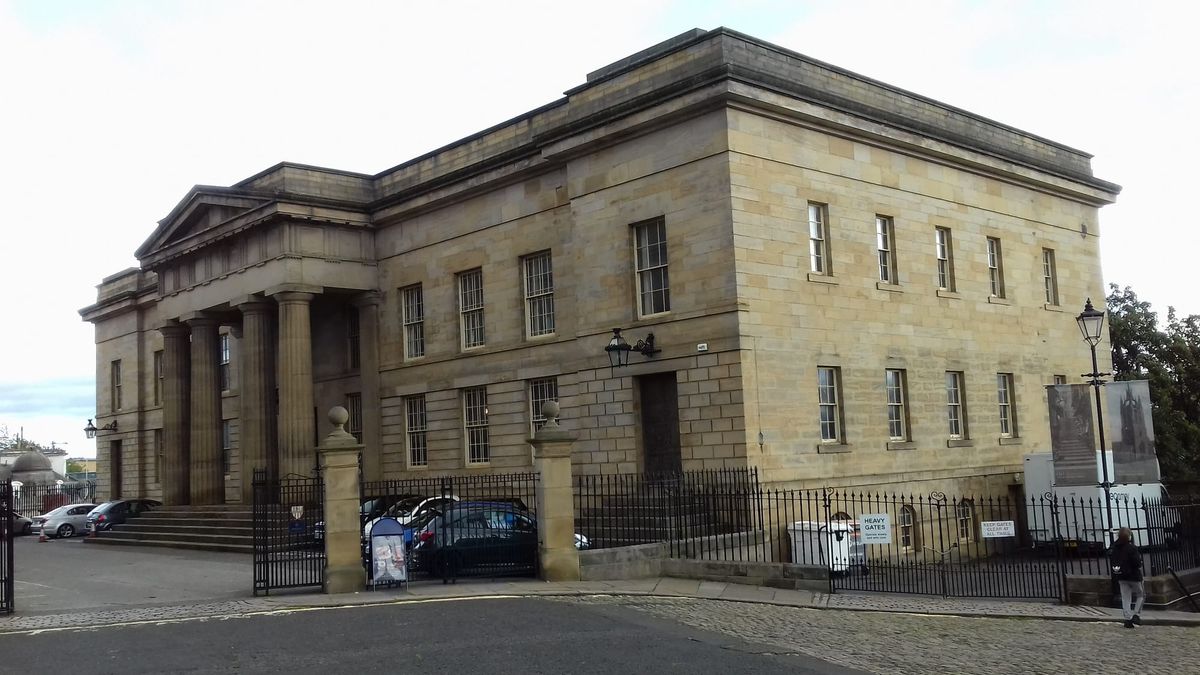
The trial's building still stands. The Moot Hall at Castle Garth, NE1 1RQ, is a Greek Revival courthouse designed by John Stokoe and finished in 1812. It heard Newcastle's Crown Court cases until the Quayside court complex opened in 1990, and it is Grade I listed.
The building overlooks the Tyne Bridge. As of April 2026, two of its courtrooms were again hearing Crown Court cases.
Scotswood has been rebuilt more than once. Housing below Whickham View was demolished in 2000. A council-led scheme called The Rise, announced around 2014, is building 1,800 homes there over two decades. Scotswood is a residential neighbourhood, not a site to tour.
Frequently asked questions
How old was Mary Bell when she killed Martin Brown and Brian Howe?
Mary Bell was 10 when four-year-old Martin Brown died on 25 May 1968, the day before her 11th birthday. She was 11 when three-year-old Brian Howe died on 31 July 1968. She was convicted of manslaughter that December, aged 11 years and six months.
What happened to Norma Bell?
Norma Bell was a 13-year-old neighbour of Mary's and no relation. She was tried alongside Mary at Newcastle Assizes in December 1968. On 17 December the jury acquitted her of all charges.
How long was Mary Bell in custody?
Mary Bell was charged on 7 August 1968 and released in May 1980, aged 23: nearly 12 years. She was held at Red Bank secure unit in Newton-le-Willows, then at HM Prison Styal, Moor Court open prison and HM Prison Askham Grange. She briefly absconded from Moor Court in September 1977 and was caught two days later.
Why can't Mary Bell be identified today?
On 21 May 2003 the High Court granted Mary Bell and her daughter lifelong anonymity, in X (A Woman Formerly Known As Mary Bell) v O'Brien. The order bars publishing anything likely to identify them, including their whereabouts and her appearance since 1980. It binds everyone, and was later extended to her granddaughter.
Where was Mary Bell's trial held?
The trial ran at Newcastle Assizes from 5 to 17 December 1968, before Mr Justice Cusack. The Assizes sat at the Moot Hall, a Grade I listed courthouse finished in 1812 at Castle Garth, overlooking the Tyne Bridge. Its courtrooms are still used for Crown Court hearings.
Sources
- X (A Woman Formerly Known As Mary Bell) & Anor v O'Brien & Ors [2003] EWHC 1101 (QB), The National Archives, judgment of 21 May 2003
- Mary Bell, Wikipedia (inquest, trial, custody and release dates)
- Moot Hall, Newcastle upon Tyne, Wikipedia (building, listing, court use)
- Long-awaited redevelopment of Scotswood finally launches, Pattinson (2000 demolition, The Rise)