
Why was Eddie Slovik shot when 48 other deserters lived?
Eddie Slovik was the only American soldier executed for desertion since the Civil War. In October 1944 he left his unit in Belgium, wrote a confession and handed it to an Army cook. A lieutenant colonel twice offered to let him tear it up. He refused. He was shot on January 31, 1945.

TL;DR: Private Eddie Slovik was shot by firing squad on January 31, 1945, the only American soldier executed for desertion in World War II. He wrote a signed confession, twice refused an officer's offer to tear it up, and General Eisenhower rejected his appeal. Forty-eight other death sentences for desertion were never carried out.
Eddie Slovik was shot on January 31, 1945, because he put in writing that he had deserted and would do it again, then twice refused Lt. Col. Ross Henbest's offer to tear the note up and return to his unit with no charges. Of 49 American soldiers sentenced to death for desertion in World War II, he was the only one executed.
As an Amazon Associate and Viator affiliate, Hidden World earns from qualifying purchases and bookings at no extra cost to you.
Who was Eddie Slovik before the army?
Edward Donald Slovik was born on February 18, 1920, in Detroit, Michigan. He grew up poor and ran into trouble with the law as a young man. His criminal record first led the draft board to classify him 4-F, meaning morally unfit for service. Later, with the army needing more infantrymen, he was reclassified 1-A and drafted on January 3, 1944.
He was sent to the European theater as an infantry replacement. By the late summer and autumn of 1944, the American army in France was taking heavy losses and was short of riflemen. Slovik was assigned to Company G of the 109th Infantry Regiment, part of the 28th Infantry Division, and was moving up toward the front when his problems began.
What did Slovik do in the summer and autumn of 1944?
In August 1944, on the way to join Company G near Elbeuf, France, Slovik and a friend, Private John Tankey, took cover during an artillery barrage at night and became separated from their group. Instead of looking for the company, they attached themselves to a Canadian unit, and Slovik spent about six weeks with it. When he returned to American lines, he did not hide. He deserted on October 9, 1944, and gave himself up, handing over a handwritten, signed note.
The note began with his name and service number, 36896415, and stated that he confessed to the desertion of the United States Army. It went on to say that he would run away again if he were sent to the front. He handed it to an enlisted cook at a military government detachment of the 112th Infantry Regiment, who took him to a military policeman. What is not in dispute is that Slovik wrote and signed the paper himself, and that it became the heart of the case against him.
Did anyone offer Slovik a way out?
Yes. Lt. Col. Ross Henbest offered twice to let Slovik tear up the note, return to his unit and face no charges. Slovik refused both times. A HistoryNet essay by a former prosecutor, who studied the trial record, makes the same point: the army gave Slovik a clear exit.
Slovik believed that a prison sentence was the safe outcome and that a stockade was better than a rifle company. The army, in the autumn of 1944, was not in a mood to hand out that kind of safety to a man who put his refusal to fight in writing.
How long did the court-martial take?
The court-martial was held on November 11, 1944, and it was short. History.com reports that Slovik was convicted in less than two hours. A panel of nine officers sat in judgment. Captain John Green presented the written confession, along with witnesses who testified about Slovik's stated intention to run away. Slovik did not testify in his own defense.
The panel voted unanimously for death. One of its members, Benedict Kimmelman, later wrote about the experience in a 1987 American Heritage article and recalled that the proceedings began in the morning and were finished before lunch. The sentence was execution by musketry, which is to say a firing squad. Major General Norman Cota, who commanded the 28th Division, approved it. Cota later said he did not know how he could have gone up to the line and looked a good soldier in the face if he had not.
What did Eisenhower do with the clemency plea?
On December 9, 1944, Slovik wrote directly to General Dwight Eisenhower asking for clemency. Eisenhower confirmed the execution order on December 23, 1944, writing that it was necessary to discourage further desertions. That was the Battle of the Bulge period, when American commanders were worried about the strength of their rifle companies, and the decision has been argued over since. HistoryNet has run a long piece asking whether Eisenhower could have saved Slovik. Those who defend the decision say it followed the written record and the army's repeated attempts to steer Slovik back to his unit. Critics say the army chose an example, since 48 others who had been sentenced to death for desertion were spared.
Key facts about the Slovik case
| Detail | Fact |
|---|---|
| Born | February 18, 1920, Detroit, Michigan |
| Drafted | January 3, 1944, after reclassification from 4-F to 1-A |
| Unit | Company G, 109th Infantry Regiment, 28th Infantry Division |
| Separated from unit | August 1944, during shelling; about six weeks with a Canadian unit |
| Desertion | October 9, 1944 |
| Offers to withdraw the note | Two, from Lt. Col. Ross Henbest; both refused |
| Court-martial | November 11, 1944; nine officers; under two hours |
| Clemency letter | December 9, 1944, to General Eisenhower |
| Eisenhower confirms | December 23, 1944 |
| Execution | 10:04 a.m., January 31, 1945, near Sainte-Marie-aux-Mines, France |
| Death sentences for desertion | 49 in WWII; only Slovik's carried out |
| Reburial | 1987, Woodmere Cemetery, Detroit |
How was the execution carried out?
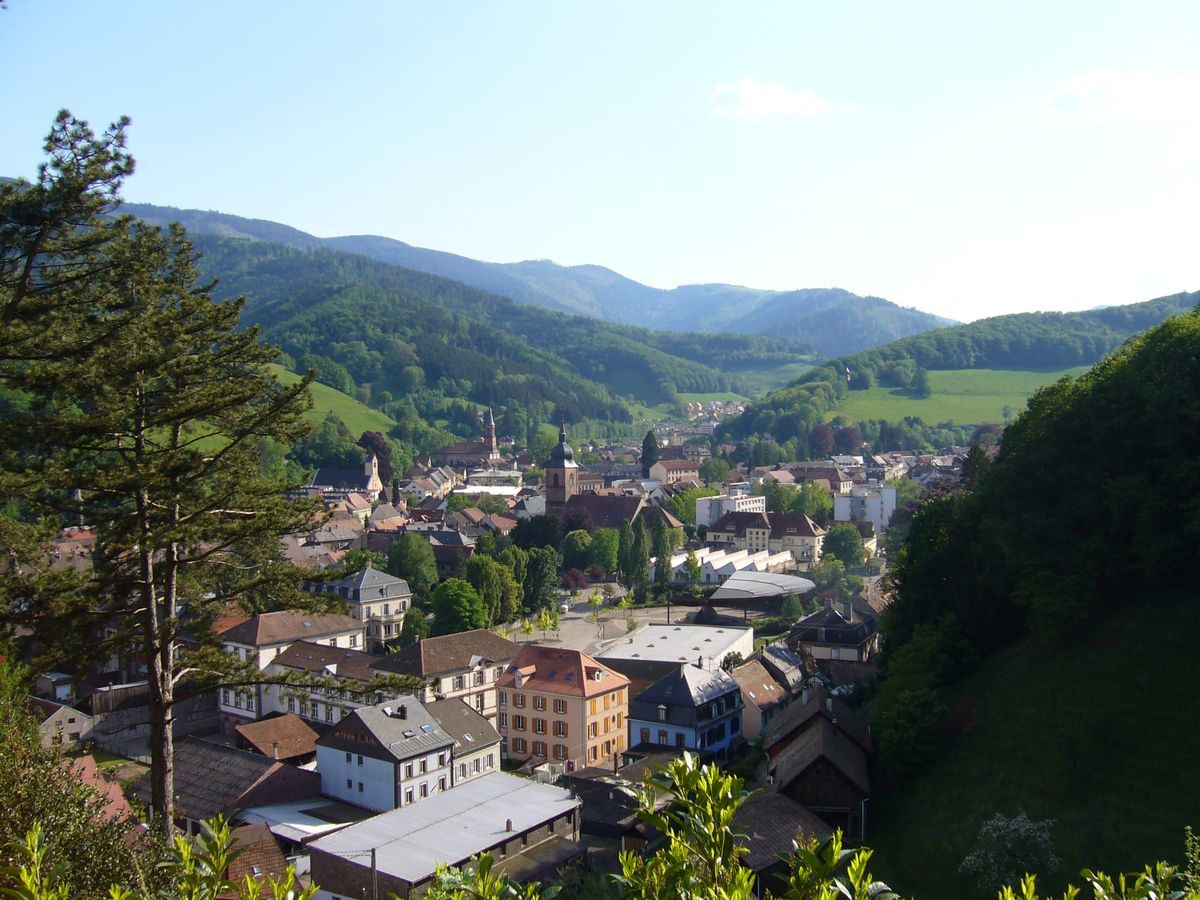
A 12-man firing squad from the 109th Regiment shot Slovik at 10:04 a.m. on January 31, 1945, in the French village area of Sainte-Marie-aux-Mines. He was the first American soldier executed for desertion since the Civil War, and no other American soldier was executed for that offense in World War II.
The army did not publicize it. His widow Antoinette did not learn the details of how her husband died until William Bradford Huie's 1954 book spelled them out. Huie worked with army cooperation and drew on court-martial records and interviews. If you want the full narrative in one place, Huie's The Execution of Private Slovik is still in print, and it reads quickly even when the subject is grim. Keep in mind that the HistoryNet prosecutor's essay argues Huie's portrait of a railroaded soldier is more good story than accurate history, so it helps to read the two side by side.
Where is Eddie Slovik buried now?
Slovik was first buried at Oise-Aisne American Cemetery at Fère-en-Tardenois, France, in Plot E, a section set apart for soldiers executed for crimes such as rape and murder. He was the only one there convicted of a purely military offense. His grave carried a number and no name.
Bernard V. Calka, a Polish-American veteran from Michigan, took up the case and raised money for the cost of bringing the remains home. In 1987 President Ronald Reagan ordered them returned. Slovik was reburied at Woodmere Cemetery in Detroit, beside Antoinette, who died in 1979 after years of unsuccessful petitions to clear his name and to recover the life insurance the army had refused her. The army has never granted a pardon.
Who played Slovik on screen?
Martin Sheen played him in the 1974 NBC television film The Execution of Private Slovik, directed by Lamont Johnson and based on Huie's book. It was nominated for five Emmy Awards and is the reason many Americans first heard the name.
Can you visit the places connected to Slovik?
You can. Woodmere Cemetery is at 9400 W Fort Street in Detroit. In France, the Oise-Aisne American Cemetery is at Fère-en-Tardenois, and the Normandy sites show the scale of the campaign that produced the manpower crisis behind the case. A day trip from Paris to the Normandy beaches and the American Cemetery covers the ground where the replacement system Slovik entered was built. If you prefer a meal on the route, there is a Normandy landing beaches tour with Omaha Beach, cider tasting and lunch. Neither tour visits Sainte-Marie-aux-Mines, which lies in the Vosges region of eastern France, so that stop needs its own trip.
How many US soldiers were executed in World War II?
The army did execute soldiers in the European theater, but for murder and rape. For desertion, the record is one: Slovik. More than 21,000 American servicemen were convicted of desertion in the war, 49 were sentenced to death, and every one of those sentences except his was commuted to a prison term.
Why was Slovik executed and not the others?
The usual answer combines three things. He put a signed confession in writing, he said he would desert again, and he twice refused the offer to withdraw it. Whether the army treated him fairly is still argued, but the written record is why his case stood apart.
Was Slovik ever pardoned?
No. Antoinette Slovik petitioned for years before her death in 1979, and the army refused. Calka succeeded in bringing the body home in 1987, but a pardon has not been granted.
What was Slovik's rank and service number?
He was a private, and his service number was 36896415, as written in his confession.