Why are there bullet holes in a wall at Père Lachaise cemetery?

This article contains affiliate links. If you book through these links, Hidden World earns a small commission at no extra cost to you. This supports our research.
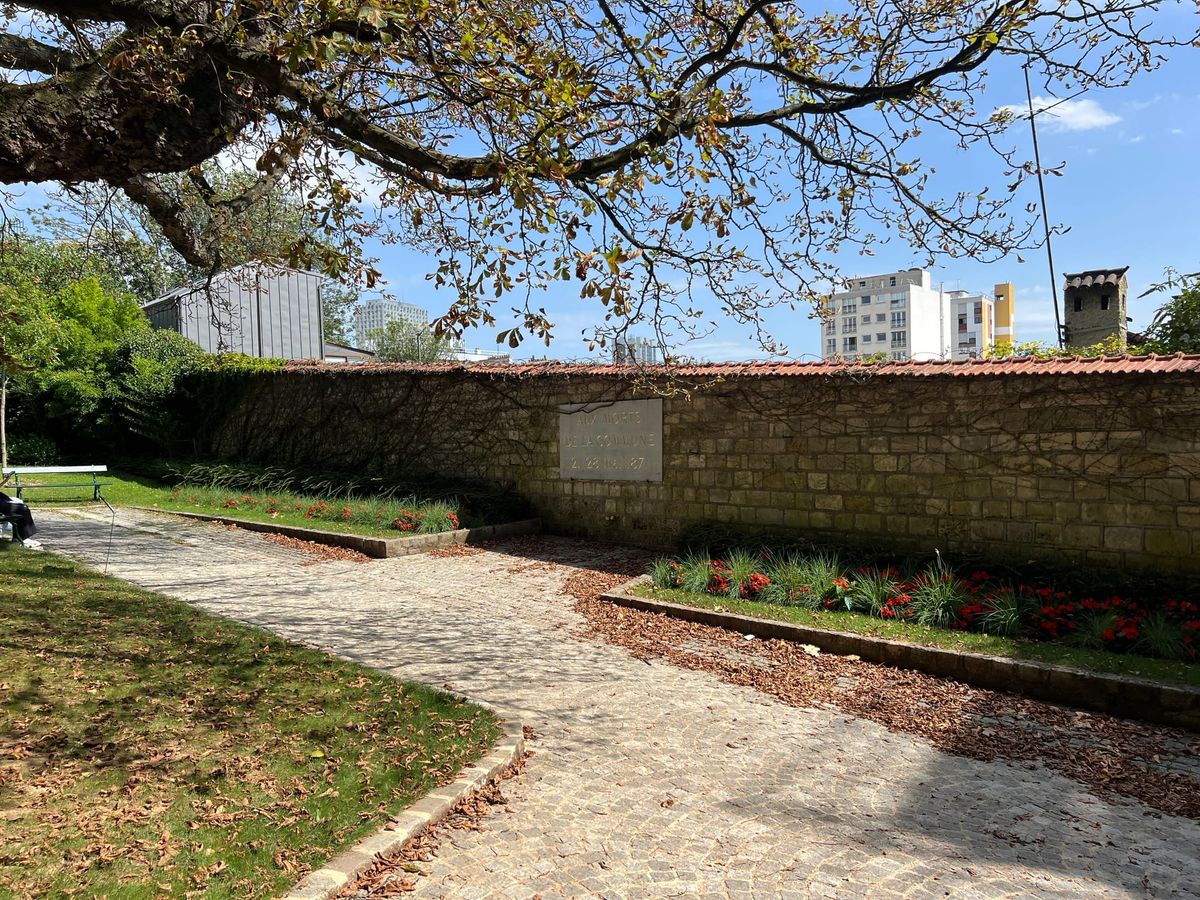
The Mur des Fédérés in the south-east corner of Père Lachaise cemetery in Paris carries visible bullet holes from 28 May 1871, the final day of the Paris Commune. 147 Communards were captured in the cemetery during the closing battle of La Semaine Sanglante — the Bloody Week — lined up against the wall, shot, and buried in a trench dug at the foot of the wall. The wall has been a site of working-class political pilgrimage since the 1880s. No restoration has been carried out on the marks. They remain as they were left 155 years ago.
What was the Paris Commune and how did it end at Père Lachaise?
The Paris Commune lasted 72 days. It began on 18 March 1871, after France's defeat in the Franco-Prussian War left Paris under siege, its population starving, and its government relocated to Versailles. Working-class Parisians — dock workers, teachers, a dentist, a painter — formed a council and attempted to govern the city themselves.
In its brief existence, the Commune abolished rent during the siege, separated church from state a full 34 years before French law caught up, and established free education for all children. Its leaders were not career politicians. They were ordinary residents of the 11th, 18th, 19th, and 20th arrondissements who had been abandoned by their own government and decided to run things differently. Historians describe the Paris Commune as the world's first working-class government, and its 72 days reshaped European political thought for the next century.
The Versailles government under Adolphe Thiers did not tolerate this. In late May 1871, government troops entered Paris and began retaking the city block by block. The week that followed became known as La Semaine Sanglante — the Bloody Week. Between 10,000 and 15,000 Communards were killed in the streets, on barricades, and in summary executions. The violence was not limited to combatants. Entire neighborhoods in eastern Paris were targeted.
The last organized resistance collapsed inside Père Lachaise cemetery on the night of 27–28 May. The Communards fought among the tombs. By morning, it was over.
Who were the 147 Communards executed at the wall?
On the morning of 28 May, the last 147 survivors of the Commune were marched to the south-east perimeter wall of the cemetery. Some accounts record that they had spent the night digging their own graves in the earth at the base of the wall. By dawn they were lined up against the stones and shot by firing squad.
They were buried in the trench they had dug. The execution wall was not a monument at the time. It was an ordinary cemetery boundary wall in the 20th arrondissement, chosen because the prisoners were already inside the grounds. The bullet holes from the volley struck the stone at varying heights. They have not been filled, smoothed, or restored. They remain visible to anyone who walks to Division 76 and looks at the wall.
The Communards who died here were not all soldiers. The Commune's membership included women — the Union des Femmes pour la Défense de Paris was one of the most active organizations during the 72 days — and the executed included both men and women. The identity of all 147 has never been fully established.
The full story of the Mur des Fédérés, with a walking route and Find It details, is in the free Hidden Paris guide — available at hiddenworld.io.
Why is the wall called the Mur des Fédérés?
The Communards referred to themselves as Fédérés — members of a federation of the people. The wall where they died took their name. The French state did not designate the Mur des Fédérés as an official memorial. It became one through repetition. People came back, year after year, and the act of returning made it a monument.
The first organized pilgrimage to the Communards' execution site took place in the 1880s, roughly a decade after the massacre. By the early twentieth century, the annual march to the Mur des Fédérés on the last Sunday of May had become one of the largest recurring left-wing political gatherings in France. Trade unionists, socialists, historians, and descendants of the Communards walk to the wall and leave flowers — red carnations mostly — at the base of the stones.
Karl Marx wrote about the fall of the Paris Commune within days of its collapse. His analysis, "The Civil War in France," was published by the International Workingmen's Association in June 1871 and became one of the foundational texts of European socialism. Lenin kept a photograph of the Commune on his desk. Upon taking power in Russia in 1917, he reportedly noted that the Bolshevik government had already outlasted the Commune by one day. The Mur des Fédérés carried political weight far beyond Paris almost immediately after the executions took place.
What does the Paris Commune memorial look like today?
Outside the May pilgrimage, the wall stands quietly at the eastern edge of Père Lachaise. It is easy to miss. A small plaque marks the site. There is no visitor centre, no museum interpretation, no audio guide. The bullet holes do not require explanation. They are legible in the stone, pocked and irregular, at roughly chest height along several meters of the wall.
Red carnations are sometimes left at the base even outside the annual march. Occasionally a wreath appears, placed by a trade union delegation or a political group visiting Paris. The rest of the time it is simply a cemetery wall with damage that nobody has repaired.
Père Lachaise itself receives over 3.5 million visitors a year, according to the official Père Lachaise site. Most of them spend their time looking for Jim Morrison's grave in Division 6. The Mur des Fédérés is in Division 76, at the opposite end of the cemetery from the main entrance on Boulevard de Ménilmontant. The walk takes about twenty minutes. On a weekday afternoon you may be the only person there.
Several Père Lachaise walking tours include the Mur des Fédérés as a stop, though the wall is typically treated as one of many points of interest rather than the focus of the tour. If the Commune history is what brought you here, going alone is better. The wall does not need narration.
What happened to the Paris Commune's legacy after 1871?
The Versailles government attempted to suppress the memory of the Commune almost immediately. Thousands of surviving Communards were deported to New Caledonia. Public discussion of the Commune was restricted. The execution sites were not marked.
It did not work. The Commune became a reference point for every major European political movement of the next fifty years. The annual pilgrimage to the Mur des Fédérés persisted through two world wars and continues to this day. In 1971, on the centenary of the Commune, an estimated 200,000 people marched to the wall.
The physical legacy is concentrated in eastern Paris — the arrondissements where the Commune's support was strongest. Streets, squares, and plaques across the 11th, 19th, and 20th arrondissements reference the Commune and its participants. But the Mur des Fédérés remains the primary site of memory. It is where the Commune ended, and it is where people return.
How to find the Mur des Fédérés in Père Lachaise
Père Lachaise cemetery is open daily. Entry is free. The Mur des Fédérés is in Division 76 — follow internal signs or use the cemetery map available at the main entrance on Boulevard de Ménilmontant. The nearest Métro stations are Père Lachaise (Lines 2 and 3) and Gambetta (Line 3). Gambetta is closer to the wall itself — enter via the secondary gate on Rue des Rondeaux and the walk is significantly shorter.
The annual pilgrimage takes place on the last Sunday of May. In 2026, that falls on 31 May. Expect large crowds on that day. The rest of the year, the wall is quiet and accessible.
The cemetery's official opening hours vary by season. From mid-March to early November, gates open at 8:00 (8:30 on Saturdays, 9:00 on Sundays) and close at 18:00. Winter hours are shorter — closing at 17:00 from early November to mid-March. Check the Père Lachaise official site for current schedules before visiting.
Frequently Asked Questions
What is the Mur des Fédérés at Père Lachaise?
The Mur des Fédérés is a wall in Division 76, the south-east corner of Père Lachaise cemetery in Paris. On 28 May 1871, 147 Communards — the last survivors of the Paris Commune — were lined up against this wall and executed by firing squad during La Semaine Sanglante. They were buried in a trench at the foot of the wall. The bullet holes from the execution are still visible in the stone and have never been restored. The wall has been a site of political pilgrimage since the 1880s, with thousands gathering on the last Sunday of May each year.
Are the original bullet holes still visible in the wall?
Yes. The marks in the stone date from the 28 May 1871 execution and have not been repaired, filled, or restored at any point in the 155 years since. They are visible at roughly chest height along several metres of the wall in Division 76. The damage is pocked and irregular — consistent with a firing squad volley at close range. No protective covering or barrier has been placed over them.
What was the Paris Commune?
The Paris Commune was a 72-day workers' government that controlled Paris from 18 March to 28 May 1871. It formed in the aftermath of France's defeat in the Franco-Prussian War, when the French government retreated to Versailles and left Paris besieged and starving. The Commune abolished rent during the siege, separated church from state, and established free education. It ended when Versailles troops retook Paris during La Semaine Sanglante — the Bloody Week — killing between 10,000 and 15,000 Communards in street fighting and summary executions. The last 147 survivors were executed at Père Lachaise.
When is the annual march to the Mur des Fédérés?
The march takes place on the last Sunday of May each year, marking the anniversary of the final day of La Semaine Sanglante. In 2026, this falls on 31 May. Thousands of people attend — trade unionists, socialists, historians, descendants, and political organizations from across France and internationally. Participants leave red carnations at the base of the wall. The tradition has continued unbroken since the 1880s.
How do I find the Mur des Fédérés in Père Lachaise?
The wall is in Division 76, at the south-east corner of the cemetery. The shortest approach is from the Gambetta entrance on Rue des Rondeaux (Métro Gambetta, Line 3). From the main entrance on Boulevard de Ménilmontant, the walk takes approximately 20 minutes through the cemetery. Entry to Père Lachaise is free and open daily. A printed map is available at the main gate, and Division 76 is marked on it.